

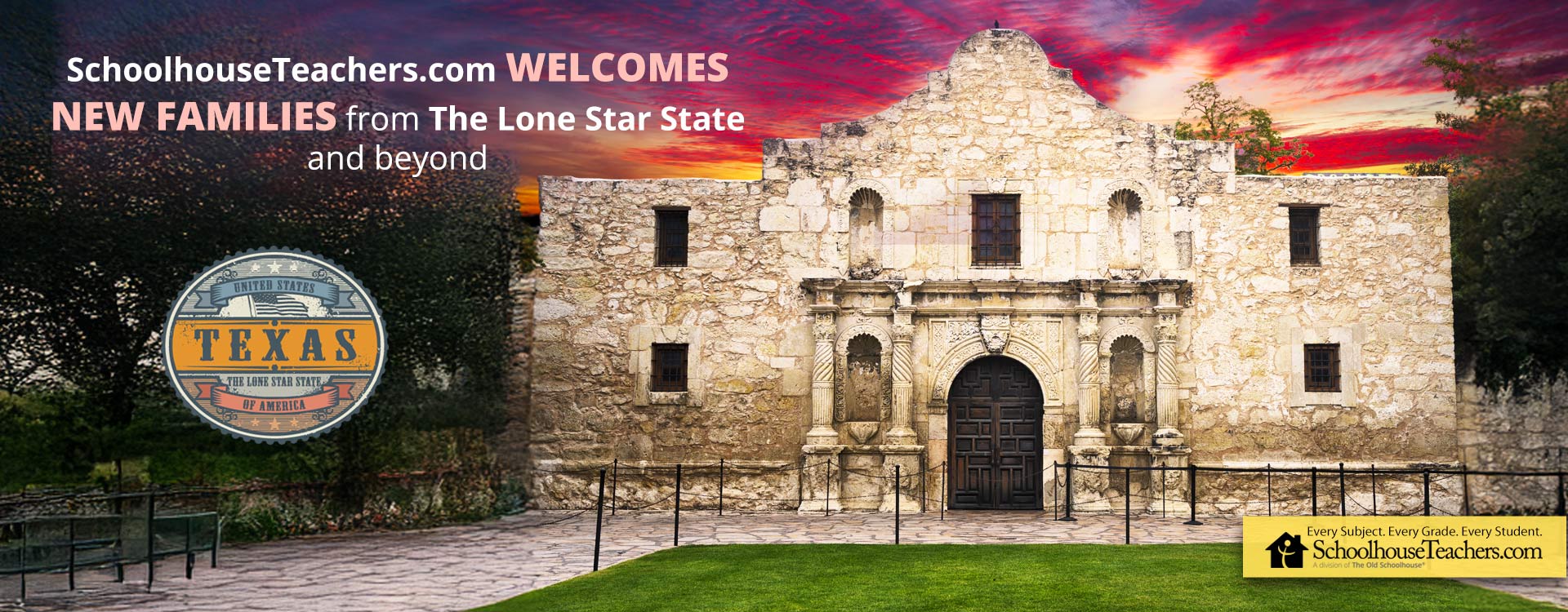
Homeschooling in Texas
Yes, you can do this here. Texas asks three core conditions of a homeschooling family.
If you are wondering whether homeschooling works where you live, the answer in Texas is yes, and the legal checklist is short. Here is what Texas asks of a family and how each piece gets handled.
For compulsory attendance, your home school is treated like a private school
Texas does not require families to register a home school or file a notice of intent. For compulsory-attendance purposes, a bona fide home school is treated like a private school under § 25.086(a)(1) and Texas Education Agency v. Leeper.
In 1994, the Texas Supreme Court unanimously decided Leeper, 893 S.W.2d 432. The Texas Education Agency describes the holding this way: students who are home schooled are exempt from the compulsory attendance requirement to the same extent as students enrolled in private schools. That exemption depends on three conditions being met: the instruction is conducted in a bona fide manner rather than as a sham, the curriculum is in written or visual form rather than purely oral, and it covers reading, spelling, grammar, mathematics, and a course of study in good citizenship.
Texas requires no registration with the Texas Education Agency, no notice of intent, no curriculum approval, no routine homeschool testing, no homeschool attendance records, no minimum number of days or hours, and no parent teaching credential. Two things do apply: a family withdrawing an already-enrolled child must formally withdraw that student, and a district may request a written letter of assurance. Both are described further down this page.
Beginning with the 2025-2026 school year, § 1.010 of the Education Code also prohibits the Texas Education Agency, the State Board of Education, and the other educational institutions covered by § 1.001(a) from adopting a rule or policy that regulates the educational program of a home school. That section was added by House Bill 2674 in 2025.
Texas compulsory-attendance law generally applies beginning at age six and until age nineteen, unless an exemption applies. It also applies to a younger child who was previously enrolled in first grade and, while enrolled, to a child in prekindergarten or kindergarten. A bona fide home school meeting the Leeper conditions qualifies for the private-school exemption. Tex. Educ. Code §§ 25.085 and 25.086(a)(1).
What Texas asks, and how to handle it
Three core conditions, drawn from Leeper and § 25.086(a)(1).
What Texas asks for
- Instruction conducted in a bona fide manner, meaning a genuine educational effort rather than a sham
- A curriculum in written or visual form, not purely oral. Books, workbooks, video, and computer-based programs all qualify
- Coverage of five subjects: reading, spelling, grammar, mathematics, and a course of study in good citizensh
How to handle it
- Use the Education Plan Builder to create a written instructional plan, then use Applecore Record Keeping to track courses, grades, and attendance as you teach
- Hundreds of courses for preschool through twelfth grade, with printable lessons and written materials
- Courses in history, government, and civics that support a course of study in good citizenship, alongside courses in the other four subjects
What Texas asks for
How to handle it
- Instruction conducted in a bona fide manner, meaning a genuine educational effort rather than a sham
- Use the Education Plan Builder to create a written instructional plan, then use Applecore Record Keeping to track courses, grades, and attendance as you teach
- A curriculum in written or visual form, not purely oral. Books, workbooks, video, and computer-based programs all qualify
- Hundreds of courses for preschool through twelfth grade, with printable lessons and written materials
- Coverage of five subjects: reading, spelling, grammar, mathematics, and a course of study in good citizensh
- Courses in history, government, and civics that support a course of study in good citizenship, alongside courses in the other four subjects
Texas does not require a homeschool portfolio, attendance record, gradebook, or test results. Families often keep transcripts, course descriptions, grades, work samples, and any test results they choose to gather because colleges, scholarship programs, employers, or military recruiters may request different supporting records later. The Records Lane below is built for exactly that, and in Texas you are keeping those records for your own family rather than for the state.
Your Texas year
Any day of the year. Texas sets no statewide filing window. If your child is not enrolled in a school, you may begin when you decide. If your child is currently enrolled, complete the withdrawal step below.
If your child is enrolled in a Texas public school. Formally withdraw the student. The Texas Education Agency says a signed, dated letter stating that the student is being homeschooled and the date homeschooling begins is sufficient. Keep a copy. TEA also says parents do not need to appear in person, present curriculum for review, or meet another condition to complete the withdrawal.
If a district contacts you. A district that learns a student may be homeschooled may request a written letter of assurance that the student is being homeschooled and that the curriculum covers the five required areas. TEA says this assurance is not required annually. If you are unsure how to respond, consult TEA’s home-school guidance or a Texas homeschool organization.
Optional state funding. Texas Education Freedom Accounts are separate from the ordinary homeschool requirements above. A participating home-school student may receive up to $2,000 for approved expenses for a school year. Participating families must follow the program’s application, approved-spending, documentation, transaction-audit, and annual continuation-notice rules. Participants in good standing do not submit a new application each year. The program does not require home-school participants to take annual assessments. Confirm current program requirements before participating.
Graduation. Texas does not issue diplomas to home-school students. Your home school prepares the student’s transcript and diploma. Under § 51.9241, a Texas public institution of higher education must apply the same general undergraduate-admission standards to an applicant who presents evidence of successfully completing a home-school education as it applies to public-school graduates.
Outside the optional Texas Education Freedom Accounts program, Texas requires no annual homeschool filing, report, test, or evaluation. Formal withdrawal and any requested letter of assurance are handled only as described above. Whatever additional records you keep are for your own family and your student’s future.
What comes with one membership
The Curriculum Lane. Hundreds of courses for preschool through twelfth grade, written from a Biblical worldview. Interactive iST courses, Virtual School Boxes, World Book Online, and thousands of family-friendly videos. Texas’s home-school standard names five subjects and leaves everything else to you, so you build the year that fits each child.
The Records Lane. The Homeschool Records & Compliance Center, with the Education Plan Builder, Custom Schedule Builder, Portfolio Builder, Applecore Record Keeping, Schoolhouse Gradebook, and more, including Certificates of Completion for every course. Transcript templates and tools that members use to prepare their own transcripts.
One membership covers every child in your house. No fee per child. No fee per course.
“SchoolhouseTeachers.com is just amazing! I’ve had my account for almost two years, and I still don’t think I’ve seen everything!”
Ammy Quinn, SchoolhouseTeachers.com member
You do not need a teaching degree
Texas sets no educational qualification for a homeschooling parent. No teaching license, no college degree, no high school diploma requirement, and no state approval of your curriculum.
Your child is being discipled either way, whether at your kitchen table or in a classroom across town. Someone is answering the big questions. Someone is teaching whom he answers to. You get to be the one.
Questions? Call 1.888.718.HOME or email customerservice@theoldschoolhouse.com. A real homeschooler answers.
Requirements vary and change. Confirm current requirements before you withdraw a child from school. SchoolhouseTeachers.com provides curriculum and recordkeeping tools. It is not a school, it is not accredited, and nothing on this page is legal advice.
Sources: Tex. Educ. Code §§ 1.010, 25.085, 25.086(a)(1), and 51.9241; Texas Education Agency v. Leeper, 893 S.W.2d 432 (Tex. 1994); the Texas Education Agency’s Home School Policy Letter and current Home Schooling page; House Bill 2674, 89th Legislature (2025); Senate Bill 2, 89th Legislature (2025); and 34 Tex. Admin. Code §§ 16.401 through 16.410.
Last reviewed: August 2026
