

Focus on Biblical Classical Education
If you’re using—or considering—Classical education in your homeschool, you’re in the right place. This Biblical Classical Education Learning Center will help you navigate the SchoolhouseTeachers.com courses that best support a Classical approach to educating your children.
The Classical method of education is a time-tested approach that guides students from preschool through high school. It is built around the idea that children learn best in stages, often called the trivium. In each stage, the method of learning aligns with children’s developing minds and natural learning tendencies:
- The grammar stage, where students build a strong foundation through memorization and exposure to facts
- The dialectic stage, where middle-grade students begin to ask questions, make connections, and think more critically about what they have learned
- The rhetoric stage, where older students learn to express ideas clearly, persuasively, and with confidence
A commonplace book is a personal scrapbook of ideas—a place for students to collect meaningful quotations, passages, artwork, images, and thoughts from their reading and studies.
This practice has been used for over 2,000 years by thoughtful readers, including early Christians, scholars, and many of America’s Founding Fathers. Rather than rushing through books, students slow down to notice what is true, beautiful, or worth remembering (Philippians 4:8)—and to reflect briefly on why it matters.
Commonplace books work alongside any classical homeschool program. They grow naturally from elementary notebooking and mature through middle school and high school as students move from recording information to collecting wisdom. Pages may be simple or creative, plain or decorated, written or visual. Many students enjoy treating their commonplace book as a scrapbook of ideas, using illustrations, doodles, or decorative elements to help ideas take root.
For families interested in the historical foundations of this idea, John Locke described his approach in 1685. Read Locke’s explanation of his method:
Download – A New Method of Common-Place Book by John Locke
Ready to begin? Here’s a simple guide and printable index.
Download – How to Build a Commonplace Book
There is no required pace and no finish line—this is a habit that grows over time.
SchoolhouseTeachers.com gives you the flexibility to build a Classical homeschool that fits your child’s needs—whether you’re just getting started or continuing your journey.

Scripture is the foundation of Biblical Classical education.
Featured Resource: Schoolhouse Bible (Pre-K–Grade 12)
- Complete Bible reading plan repeated across five developmental stages
- Spiral approach: students move from Bible stories to full Scripture, increasing depth with each cycle through Old and New Testaments.
- Memory verses selected to match each stage of learning
- Flexible response options: coloring pages for younger students, written responses for older students
- Designed to grow with the student across all stages of the trivium
The courses listed below are not a complete catalog. Instead, they provide a sample pathway through each stage of the trivium, helping you see how a Classical education can be structured using SchoolhouseTeachers.com resources.

Bible
Grammar Stage (Foundations)
Bible Study for Preteens (Elementary–Middle School)
Dialectic Stage (Understanding & Analysis)
Apologetics: Creation vs. Evolution (Middle School–High School)
Discovering Our Amazing God (Middle–High School)
Rhetoric Stage (Expression & Communication)
Advanced Apologetics (High School)
Introduction to Worldview and Philosophy (High School)
Reading Religious Affections (High School)
Art
Grammar Stage (Foundations)
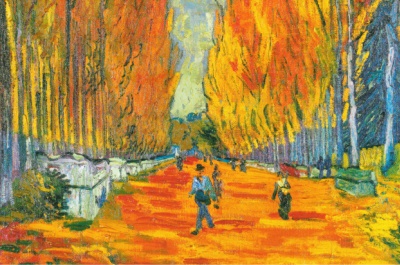
Learning About Art (Preschool–Elementary)
- Elements of art (line, shape, movement) and master artists
Elementary Art (Elementary)
- Color theory, basic art concepts, and introduction to artists
Dialectic Stage (Understanding & Analysis)
Discovering Art History (Elementary)
- Grouping by style, subject, and artist
A Century of Art (Middle School)
- Artistic styles in historical context
Rhetoric Stage (Expression & Communication)
Art & History: Interconnected (High School)
- Explore cause-and-effect relationships and communication of ideas through art
Art: The Timeless Treasure (High School)
- Study of style, architecture, and artistic movements
Multi-Stage (Flexible / Enrichment)
Everyday Easels (Elementary–High School)
- Art appreciation across multiple subjects (history, writing, Bible, science)
Studio Art for Teens (Middle School–High School)
- Study and imitation of master artists develops skill and expression

Drama and Speech
Grammar Stage (Foundations)
Simply Shakespeare (Elementary–High School)
Dialectic Stage (Understanding & Analysis)
Public Speaking (Introduction) (Middle School–High School)
Rhetoric Stage (Expression & Communication)
Advanced Public Speaking (Middle School–High School)

Electives
Electives in a Biblical Classical education are not simply extras—they help shape the whole student. While core subjects train the mind through the stages of the trivium, electives offer opportunities to develop creativity, practical skills, and personal interests. Rather than following a fixed list, families can choose electives that align with a student’s strengths and goals, using them to reinforce learning, encourage expression, and support growth across all stages.
Browse the full list of electives to find options that fit your student best. Be sure to explore the wide range of learning available in our unit studies as well.
Foreign Languages
Latin forms the foundation of language study in a Classical education, supporting vocabulary development, grammar, and understanding of many modern languages.
Beginning Latin (Elementary–High School)
Latin II (Middle School–High School)
While Latin is central in a Classical approach, students may also explore other languages based on interest, goals, or future study.
Browse the full Foreign Language collection to explore additional options, including modern and conversational languages, such as ASL, Spanish, German, or Korean.

Geography
Grammar Stage (Foundations)
All About Maps (Elementary)
Exploring Elementary World Geography (Elementary)
Unit Studies: Geography: All About the World (Elementary)
Dialectic Stage (Understanding & Analysis)
All About Maps (Middle School)
Unit Studies: Geography: All About the World (Middle School)
Rhetoric Stage (Expression & Communication)
Geography of the Bible (High School)

History
In a Classical approach, students study history in a chronological cycle—Ancient, Medieval, Early Modern, and Modern—repeating the sequence at increasing levels of depth. Our Classical History School Boxes are designed to support this approach, making it easier to follow the four-year cycle.
Grammar Stage (Foundations)
Ancient History for Elementary
Medieval to the Renaissance: Elementary History
World History: Exploration and Colonization (Elementary)
Dialectic Stage (Understanding & Analysis)
Ancient World History / Classical History (Elementary–Middle School)
Renaissance History (Elementary–Middle School)
Kingdoms of the World: 15th- 18th Century: World History (Middle School)
Expansion, Independence and War (Middle School)
Rhetoric Stage (Expression & Communication)
Understanding Ancient History (High School)
Medieval to the Renaissance: High School History
World History (High School)
Understanding Modern History (High School)
Students may also explore key historical documents and pivotal moments through a primary source approach:
This Changed Everything: Turning Points in History (Grades 9–12)

Language Arts – Literature
In a Classical approach, students encounter great works of literature through increasing levels of depth—first through exposure and enjoyment, then through analysis and discussion, and finally through evaluation and thoughtful response. The courses below highlight a sample progression through each stage.
Grammar Stage (Foundations)
At this stage, students build a love of reading through exposure to engaging stories and familiar works.
Loving Literature through Chapter Books (Elementary–Middle School)
Literature (Elementary–High School)
Discovering Poetic Elements (Elementary–Middle School)
Dialectic Stage (Understanding & Analysis)
At this stage, students begin to analyze literature more closely, recognizing themes, structure, and meaning.
Experiencing Epics and Poetry (Middle School)
Literature (Elementary–High School)
Fundamental Elements of Literature and Composition (Middle School–High School)
Rhetoric Stage (Expression & Communication)
At this stage, students engage deeply with classic works, evaluating ideas and forming thoughtful responses.
Great Books with Dr. Hake, Part One (High School)
Classics of English Literature (High School)
American Literature in Historical Context (High School)

Language Arts – Writing
In a Classical approach, writing develops through imitation and structure, leading to clear, thoughtful expression. Students begin by copying and modeling strong writing, then learn to organize ideas, and finally develop their own voice through essays and analysis.
Grammar Stage (Foundations)
At this stage, students build writing skills through imitation, copywork, and guided composition.
Everyday Copywork (Elementary–Middle School)
Adventures in Writing (Elementary)
Here to Help Writing (Paragraph Levels)
Dialectic Stage (Understanding & Analysis)
At this stage, students learn to organize ideas, analyze models of good writing, and develop structured compositions.
Benjamin Franklin Writing Method (Middle School–High School)
Classics-Based Writing (Middle School–High School)
Here to Help Writing (Essay Levels)
Rhetoric Stage (Expression & Communication)
At this stage, students refine their voice, developing clear arguments and thoughtful written expression.
Essay Writing 101 (Middle School–High School)
Classics-Based Writing (Middle School–High School)
The Writing Life: Learn to Write Well (High School)

Logic
In a Classical approach, logic trains students to think clearly, evaluate arguments, and discern truth across disciplines. This work takes place primarily in the Dialectic and Rhetoric stages.
Formal Logic
Logic (Middle School–High School)
- Develops the ability to analyze arguments and recognize faulty reasoning.
Applied Logic
Geometry in Real Life (High School)
- Shows how logical reasoning underlies mathematical thinking and real-world problem solving.
Fundamentals of Legal Reasoning (Grades 11–12)
- Applies logical thinking to legal cases, argument structure, and real-world decision-making.
Worldview & Apologetics
Unbreakable Faith: Assurance in a World of Unbelief (High School)
- Strengthens students’ ability to defend their beliefs and evaluate competing worldviews.
Creation Apologetics (Middle–High School)
- Equips students to examine scientific and philosophical claims, applying logical reasoning to questions of origins and truth.
Creation Worldview (Middle–High School)
- Helps students build a coherent Biblical worldview by connecting foundational beliefs with clear, logical thinking.
Mathematics
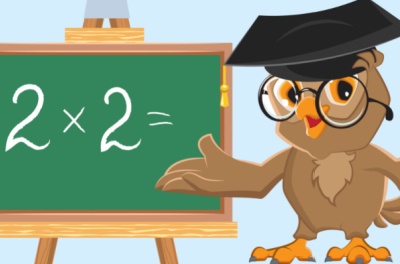
In a Classical approach, mathematics develops logical thinking and problem-solving skills. Students begin by mastering foundational skills, then move toward understanding relationships and applying mathematical reasoning.
SchoolhouseTeachers.com follows a traditional progression from early math through advanced courses:
Grammar Stage (Foundations)
Building a Foundation with Kindergarten Math
Starting Out with First Grade Math
Stepping Up with Second Grade Math
Stretching Higher with Third Grade Math
Strengthening Skills with Fourth Grade Math
Steaming Ahead with Fifth Grade Math
Staying Sharp with Sixth Grade Math
Dialectic Stage (Intermediate)
Rhetoric Stage (Advanced Study)
Music
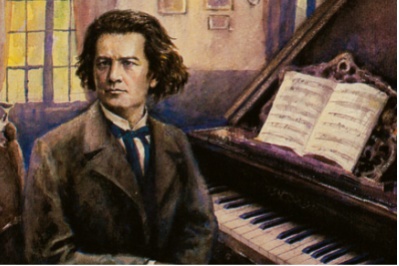
In a Classical approach, students learn to appreciate music, understand how it is structured, and develop their own ability to create and perform.
Grammar Stage (Foundations)
Appreciating the Gift of Music (Kindergarten)
Great Musicians (Elementary)
Dialectic Stage (Understanding & Analysis)
If It Isn’t Baroque . . . The History of Western Music (Elementary–High School)
Music Theory I & II (Elementary–High School)
Rhetoric Stage (Advanced Study)
Composing with the Masters (Middle School–High School)
Advanced Music Theory (High School)
Music Throughout History (High School)
Students may also explore performance through instrument instruction such as violin, guitar, or drums.

Science
In a Classical approach, students begin by observing the natural world, then move toward understanding systems and scientific principles, and finally study specific disciplines in greater depth.
SchoolhouseTeachers.com follows a structured progression from elementary science through advanced courses:
Grammar Stage (Foundations)
Exploring God’s World with Kindergarten Science
Exploring God’s World with First Grade Science
Exploring God’s World with Second Grade Science
Exploring God’s World with Third Grade Science
Exploring God’s World with Fourth Grade Science
Exploring God’s World with Fifth Grade Science
Exploring God’s World with Sixth Grade Science
Dialectic Stage (Understanding & Analysis)
Introduction to Physics: Middle School
Physical Science (Middle School–High School)
Earth Science (Middle School–High School)
Rhetoric Stage (Advanced Study)
High school students may follow a traditional sequence of science courses, with options available for varying levels of depth and rigor:
Beneath the Waves: Marine Biology
General Biology or Friendly Chemistry: Foundations
Social Studies
Grammar Stage (Foundations)
Elementary Economics for First Grade
Elementary Economics for Second Grade
Elementary Economics for Third Grade
Elementary Economics for Fourth Grade: Global Economics
Elementary Economics for Fifth Grade: Interdependent Economics
Elementary Economics for Sixth Grade Currency and Its Impact
Dialectic Stage (Understanding & Analysis)
Ancient Citizens in Ancient Civilizations (Elementary–Middle School)
Free Market Economics (Middle School–High School)
American Government (Middle School–High School)
Rhetoric Stage (Advanced Study)
Constitution and Bill of Rights (High School)
Free Men and Free Markets: Government and Economics (High School)
Biblical Philosophy of Government (High School)
Additional Resources

Unit Studies: Various – Study Skills and Notetaking Tips
Need to strengthen study habits or improve note-taking? This unit study offers practical strategies for organizing information, retaining what you learn, and building confidence across subjects. Suitable for grades 6–12.
Homeschooling Methods eBooks
Looking for a deeper understanding of Biblical Classical Education? Members can explore the following eBooks brought to you by The Old Schoolhouse® Magazine in the Homeschool Methods section of the Parent eBook Library.
- A Classical Education
- Simplifying Classical Education
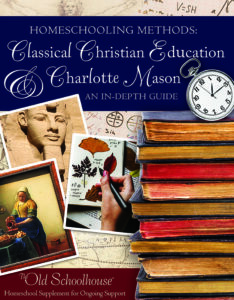
- Homeschooling Methods: Classical Christian Education
The Homeschool Minute: Classical Education
Read about what Classical education includes through practical articles and insights from The Homeschool Minute.
Start building your Biblical Classical homeschool today!
